
What to Feed Rescued Kittens
Back to Pet Insurance By State
When a tiny life lands on your doorstep, every heartbeat matters. A rescued kitten depends on you for more than warmth and safety; its future hinges on the food you choose in those first critical weeks. If you’re wondering what to feed rescued kittens, you’re not alone. The right nutrition can mean the difference between a thriving, curious fluff ball and a fragile, fading moment.
This post answers that question with clear, practical steps you can follow today. You’ll learn how to assess age and needs, move from milk to solids safely, and pick formulas and foods that support growth, immunity, and energy. We’ll cover the basics without drama, so you can act with confidence even if you’re new to kitten care. Expect practical timelines, simple feeding schedules, and quick tips you can apply right away.
Feeding orphans isn’t just about calories. It’s about preventing common pitfalls like dehydration, diarrhea, and malnutrition that can quickly escalate into serious problems. You’ll see why cow’s milk is a bad idea, how to recognize when a kitten is ready to transition, and which foods provide the nutrients growing bodies need. The goal is steady weight gain, comfortable digestion, and a calm, confident routine that reduces stress for both you and the kitten.
By the end of this introduction, you’ll have a practical framework for feeding rescued kittens that you can adapt to each little life you help. You’ll understand the key stages from newborn to weaning, know which formulas to choose, and be ready to make fast, informed decisions when every moment counts. If you’re ready to act, you’ll give these tiny fighters a real chance to thrive.
First, Figure Out Your Rescued Kitten’s Age and Health Needs
Before you plan meals, take a quick snapshot of where the kitten stands. Age and health determine feeding urgency, formula choice, and the need for veterinary input. Start with a careful look at signs you can verify at home, then confirm with a shelter or vet if you’re unsure. This foundation helps you avoid underfeeding, overfeeding, or dangerous transitions that can upset a fragile system.
Spotting Newborn vs. Weaning Kittens at a Glance
- Newborns (0–2 weeks): hairless or nearly hairless, eyes closed, ears shut, and entirely dependent on a bottle. Weight is typically 3–4 ounces at birth. Warmth is critical; they digest best when comfortably warm.
- 1–3 weeks: eyes begin to open around day 7–10; feeding remains bottle-based, and there are no teeth yet.
- 3–5 weeks: teeth start to show, and some kittens begin trying very soft solids. They still rely heavily on milk or milk substitute.
- 5–6 weeks: more teeth appear and many start accepting small amounts of solids.
- 6–8 weeks: most will eat some solids reliably and weigh more as they gain strength.
- When in doubt, treat as younger and escalate feeding urgency slowly, always prioritizing warmth and hydration. If a kitten seems sluggish, dehydrated, or unresponsive, seek veterinary guidance immediately. A kitchen scale helps you track progress week by week.
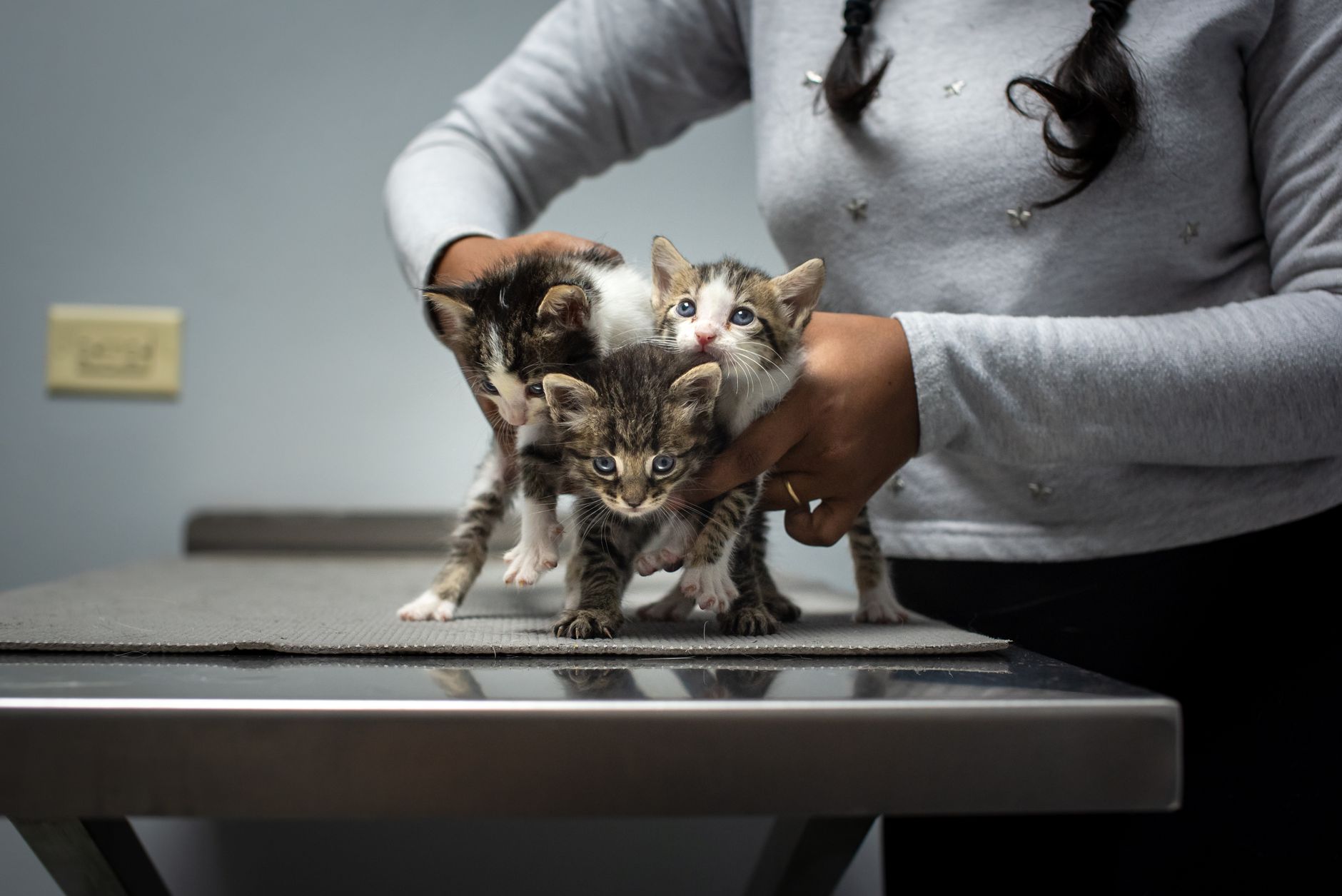 Photo by Dominik Gryzbon — Three cute rescue kittens being held by a person at a veterinary clinic in Trinidad.
Quick Health Checks Before You Start Feeding
- Warmth first: warm, not hot, is essential. Use a low-heat warming pad, a hot water bottle wrapped in a blanket, or hold the kitten close to your body until it feels warm to the touch.
- Gums and hydration: pink, moist gums are a good sign. If gums are pale, or there’s lethargy, dehydration is likely.
- Abdomen after feeding: a soft, round belly indicates proper digestion; a tight or bloated belly can signal distress or overfeeding.
- Aspiration risk: always feed slowly and upright to reduce the chance of liquid entering the lungs.
- Fresh water after solids: once you introduce solids, ensure access to fresh water to aid digestion.
- Vet or shelter check: dehydration, fleas, or a low temperature in newborns warrants professional evaluation before increasing feeding complexity.
A kitchen scale, a simple syringe without a needle, and a small bottle are useful tools to have on hand. If you’re unsure about health status, book a quick consult with your local shelter or veterinarian before starting any feeding plan. This ensures you’re not missing any red flags and that you choose the safest path for nourishment.
What to Feed Rescued Kittens: A Practical Feeding Guide
In the first five weeks, milk is the foundation for growth. This section covers the best milk replacers and a safe, predictable schedule to keep newborns strong and steadily gaining weight. You’ll learn which formulas to trust, why they beat cow’s milk, and how to time feeds so tiny bodies stay hydrated and energized.
Top Milk Replacers and Why They Beat Cow’s Milk
Milk replacers designed for kittens deliver the nutrients essential for fast, healthy growth. They provide the right protein and fat balance, plus taurine and digestible lactose levels that little stomachs can handle. Cow’s milk is not suitable: it’s high in lactose and low in the calories and nutrients kittens need, which often leads to diarrhea and malnutrition.
Best options include KMR brands such as PetAg KMR, Just Born, and Breeder’s Choice. These formulas mimic queen’s milk closely, offering robust protein and fat profiles along with taurine, DHA, and added prebiotics or probiotics to support digestion. For families and shelters on a budget, Hartz Powdered Milk Replacer is a solid value with a gentle formula that still leans toward the nutrient goals for newborns. Here’s a quick nutrient snapshot to guide your choice:
- Protein: High and balanced to support rapid growth.
- Fat: Adequate energy density for tiny bodies.
- Taurine: Essential for heart and eye health.
- Lactose: Low or highly digestible to minimize tummy upset.
- Digestive support: Probiotics or prebiotics can help with digestion and stool consistency.
Where to buy: pet stores (PetSmart, Petco), independent pet shops, shelter supply programs, and brand websites. If you’re rescuing from a shelter, ask if they can provide a starter supply or donations. Remember, never use cow’s milk or human baby formula for kittens. They lack the right balance and cause diarrhea and weight loss.
Recommended brands to consider:
- PetAg KMR Powder or Liquid
- Just Born Kitten Milk Replacer
- Breeder’s Choice Kitten Milk Replacement
- Hartz Powdered Milk Replacer (budget-friendly option)
Stress safety: always check the label for exact mixing instructions and feeding guidelines, and adjust for your kitten’s age and weight.
Feeding Schedules: Birth to 5 Weeks
Keeping a steady schedule prevents hypoglycemia and dehydration. Start with frequent feeds and gradually extend intervals as the kitten grows. Use a bottle or syringe, ensure formula is about 100°F, and follow daily weight checks to stay on track.
| Age (weeks) | Feeds per day | Feed amount per feed | Calorie target per 100 g | Notes |
|---|---|---|---|---|
| 0–1 | 8–12 | 2–4 ml | 25–30 kcal | Feed every 2 hours; belly-down position; burp gently |
| 1–2 | 8–12 | 5–10 ml | 25–30 kcal | Still bottle-fed; monitor weight gain daily |
| 2–3 | 6–8 | 13–18 ml | 25–30 kcal | Begin very soft solids if signs of readiness |
| 3–4 | 5–6 | 20–25 ml | 25–30 kcal | Increase solids; continue milk as base |
| 4–5 | 4 | 30–40 ml | 25–30 kcal | Mix milk with wet kitten food; ensure hydration |
Important notes:
- Always weigh daily to confirm weight gain. A round belly after feeding is a good sign.
- If a kitten is weak or has a cleft palate, consider tube feeding under veterinary guidance.
- Avoid skipping feeds to prevent dangerous drops in blood sugar.
Tips to maximize success:
- Keep a consistent warm environment around 100°F for feeds.
- Position the kitten belly-down during and after feeding to reduce aspiration risk.
- Burp gently after each feeding and observe for signs of digestion or distress.
- If you notice persistent vomiting, diarrhea, or extreme lethargy, contact a veterinarian promptly.
How to Introduce Solid Foods Without Upsetting Tummies (5-8 Weeks)
Transitioning a rescued kitten from bottle feeds to solids is a delicate dance. The goal is to provide a smooth, predictable path that supports growth, digestion, and curiosity without causing stress or tummy upset. In this section, you’ll find practical steps tailored to 5-8 week old kittens, with clear guidance on textures, timing, and meal structure. Think of this as building a bridge from milk to meals: sturdy, gentle, and adjustable to each tiny eater. You’ll learn which textures to start with, how to soften foods for easy swallowing, and how to read early cues that a kitten is ready for more variety or more time with solids.
Best Wet and Dry Foods for First-Time Eaters
For 5-8 week old kittens, texture matters as much as nutrition. Start with pate-style wet foods that offer a smooth, easy swallow and high protein to support rapid growth. These options tend to be gentler on developing digestion and make the transition from milk more natural. Pair wet with a dry kibble that’s high in protein and easy to moisten.
- Wet foods: choose kitten-specific, high-protein pate varieties. Look for real meat as the first ingredient and a short ingredient list to reduce tummy strain. Avoid foods with heavy gravy that can create a mess or overwhelm tiny mouths.
- Dry kibble: pick a high-protein kitten formula and soften it with warm water or formula to a mash-like consistency. This helps tiny teeth and developing jaws work through textures without overloading their digestion.
- Mixing strategy: a gentle soup of wet food and formula once or twice daily can help new eaters learn the idea of solids while keeping hydration steady. Change the wet option regularly to minimize spoilage and keep meals appealing.
Practical tips you can apply today:
- Always serve foods at a warm, comfortable temperature to invite tasting and prevent stomach shock.
- Monitor how long a meal sits after serving; discard any leftovers after a short window to prevent spoilage.
- Keep hydration on track with fresh water available at all times and offer small, frequent meals to prevent dips in energy.
- Watch for signs of overfullness or signs of stress during meals and adjust texture or portion size accordingly.
Sample Feeding Approach for 5-8 Week Old Kittens
This is a gentle, phased approach you can adapt to each kitten. Start with daily routines that mix wet and softened dry, then gradually introduce more solids as appetite and digestion adapt.
- Begin with mostly wet pate-style foods, offered in small, frequent meals.
- Soften dry kibble with warm water or formula until it forms a soft mash.
- Provide 4-5 small meals per day to keep energy steady and reduce the risk of gastro upset.
- Offer a daily soup of wet food plus formula to ensure hydration and calories are consistent.
- Rotate wet flavors every few days to keep meals appealing and to prevent food boredom.
- By week 8, begin offering more solid textures and increased dry intake as digestion strengthens.
Important cues to watch for during feeding:
- Interest level and appetite: a healthy kitten will show renewed interest in each meal and finish what is offered.
- Digestive comfort: soft stools and a comfortable, round belly after meals are good signs.
- Hydration: gums should remain pink and moist; a dry mouth or lethargy warrants vet input.
- Eating pace: fast or frantic eating may hint at overstimulation; slow it down with smaller portions.
Following these guidelines helps you establish a reliable feeding rhythm that protects weight gain and comfort. As the weeks progress, you’ll notice how meals become less about force and more about a growing kitten exploring textures, flavors, and the joy of a full belly.
Foods to Never Feed Rescued Kittens and Why They Harm
When you bring a rescued kitten home, what you feed is as important as how you care for it. Some common feeding habits quietly undermine growth and health. This section busts the myths around feeding mistakes that can derail a fragile kitten’s journey to thriving.
Myth-Busting Common Feeding Mistakes
Back-feeding, or feeding with the kitten on its back, raises the risk of aspiration pneumonia. A tiny throat can’t handle liquid in the lungs, leading to coughing, fever, and slow recovery. Feeding formula cold slows digestion and can trigger cramps, reluctance to eat, and poor weight gain. Skipping regular weigh-ins hides early signs of trouble, allowing dehydration or underfeeding to sneak in. Keep the kitten in a belly-down, head-straight position, warm formula to about 100°F, and weigh daily to catch issues early. Consistency saves lives.
Extra Tips for Feeding Success and Knowing When to Call the Vet
Feeding rescued kittens well is a blend of careful observation, steady routines, and quick action when things don’t go as planned. In these tips, you’ll find practical guardrails that protect growth, digestion, and energy. You’ll also learn signals that mean it’s time to seek professional help. This section builds on the basics you’ve started and helps you act with confidence.
 Photo by Tahir Xəlfəquliyev — Kitten care moments that remind us why careful feeding matters.
Daily Weight Tracking and Calorie Awareness
- Weigh every kitten daily, ideally before the first meal. Small gains matter, and a scale makes trends obvious.
- Focus on calories per day rather than volume. Target steady weight gain appropriate to their age, and adjust portions if the scale stalls.
- Use a simple chart to track weight, calories, and any notes about stool or energy. This is your early warning system for problems.
Transition Cues and Feeding Rhythm
- Move from 2 to 4 hour feeds gradually as weight increases, then to longer intervals in a controlled way.
- When introducing solids, follow texture progressions and watch for digestion bumps like soft stool or gas.
- Keep hydration a constant companion. Fresh water should be available after solids, and you can offer electrolyte solutions if advised by a vet.
Signs to Call the Vet Immediately
- No weight gain over several days or a drop in weight.
- Diarrhea, persistent vomiting, or signs of dehydration like very dry gums or sunken eyes.
- Lethargy, tremors, cold limbs, or not feeding despite a good appetite.
- Weakness after a fall or injury, or if a kitten seems to be struggling with breathing.
Common Pitfalls to Avoid
- Skipping feeds or letting a bottle go cold.
- Using cow’s milk or human formula.
- Overfeeding, which can cause vomiting, diarrhea, or a distended belly.
- Ignoring subtle signs of illness in the rush to keep a schedule.
- Waiting too long to seek veterinary input when weight or energy drift off course.
This section gives you practical, easy-to-use steps to keep rescued kittens thriving. Stay observant, stay consistent, and reach out early if anything seems off.
Conclusion
Knowing what to feed rescued kittens by age and need saves lives, plain and simple. From newborns relying on milk replacers to older kittens tasting solids for the first time, the right nutrition keeps energy high, digestion smooth, and growth steady. Use age appropriate milk formulas first, then transition with gentle textures, always aiming for steady weight gain and calm meals. This is about consistent routines, warm feeds, and clear signs that tell you when to ask a vet for help.
The journey pays off in confident decisions, less stress for both of you, and a kitten that thrives in the days and weeks ahead. Share your rescue story or a feeding win, consult your veterinarian when a red flag appears, and consider adopting to open a space in your home for another life. Your thoughtful care creates a ripple of health that extends beyond a single meal.
Thank you for taking the time to learn how to feed rescued kittens well. The knowledge you gain today helps more tiny lives tomorrow, and that hopeful future starts with your next act of care.
Back to Pet Tips