
Traveling with Cats in Car Long Distance
Back to Pet Insurance By State
You made it to the big day for traveling with cats in car long distance. Now focus on smooth routines that keep stress low. Start with last-minute prep: close all car doors, crank the AC or heat to hit 68 to 72 degrees Fahrenheit, and secure the carrier in the back seat with a seat belt. Buckle it tight so it stays level and stable.
Bring your cat out last, speak in a soft voice, and skip any emotional goodbyes that ramp up nerves. Keep the car quiet with low music and steady speeds to avoid sudden stops. Plan breaks every 2 to 4 hours for water, quick litter use, and checks. Many cats skip meals on the road due to motion; that’s fine for short trips if they ate lightly before. Never leave your cat alone in the car; temps climb fast even on mild days. For an 8 to 10 hour drive, try this timeline:
- 8 AM: Load up and roll out after a light home breakfast.
- 10 AM: First break for water and stretch.
- 12:30 PM: Lunch stop with small food offer and litter.
- 3 PM: Water, litter check, quick walk on harness.
- 5 PM: Final break before arrival around 6 PM.
This pace gives your cat four chances to reset without rushing.
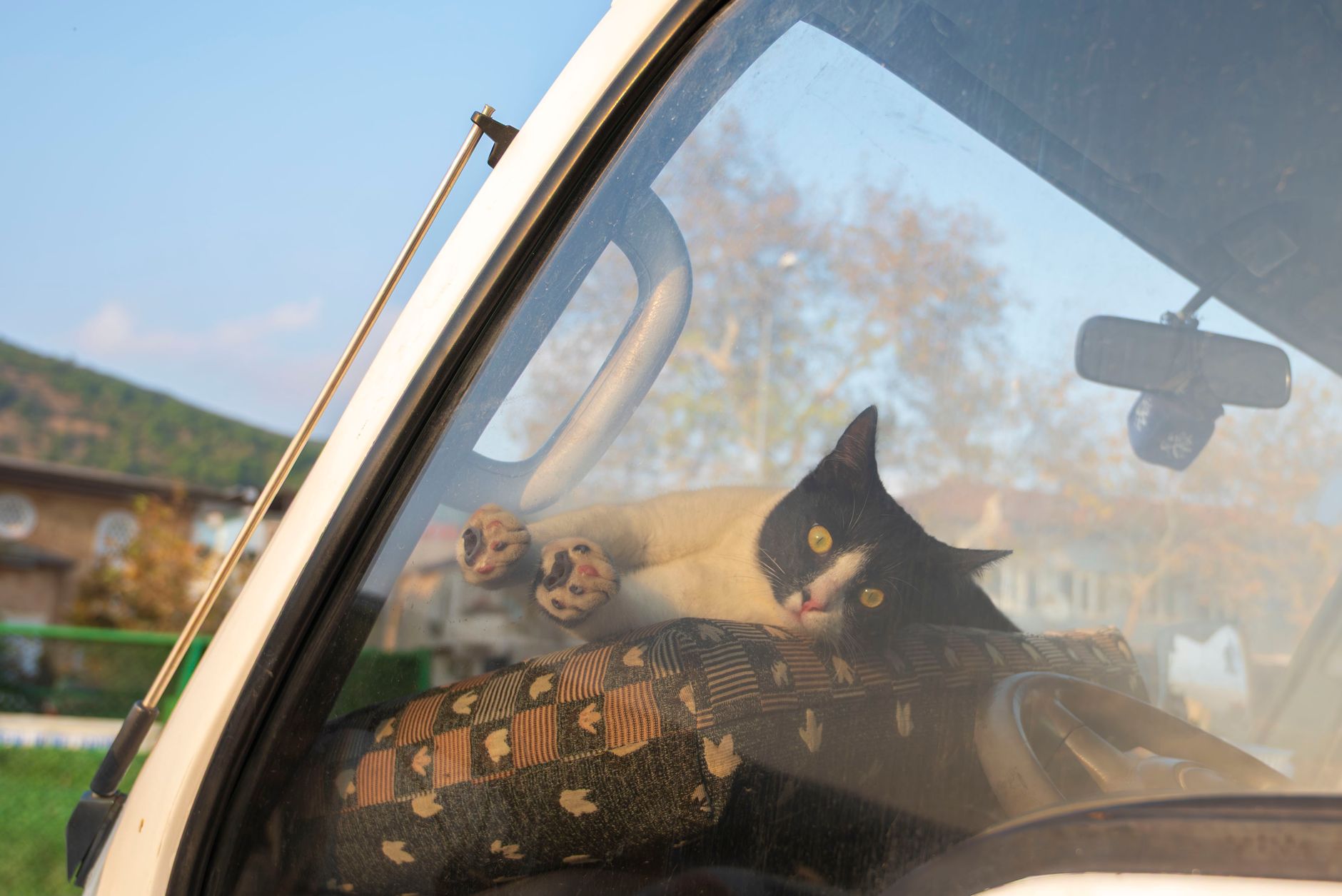
Photo by MEHMET KAYNAR
Before you start the engine: a calm loading routine
Picture a peaceful send-off. Park your car in shade if possible. Shut all doors to block escapes or outside scares. Fire up the engine first and adjust the temp to that comfy 68 to 72 degrees range. Feel the air flow steady before anything else.
Grab the prepped carrier next. Slide it into the back seat, facing forward to ease motion sickness. Thread the seat belt through the handles or door straps. Tug hard to test; it should not budge or tip. Wedge towels around the base if needed for extra hold.
Now fetch your cat. Carry them gently to the car in your arms or a towel. Use a calm, low voice: “Good kitty, we’re going for a ride.” Slip them inside last, latch the door firm, and cover three sides with a breathable towel. No big fuss or family waves; that just spikes their pulse. Your steady routine sets a chill tone for the whole trip.
How often to stop, and what to do at each stop
Pull over every 2 to 4 hours, or sooner if you hear distress. Pick quiet spots away from traffic noise, like rest areas with grass. Park, shut off the engine, and check the carrier temp first; it should match the car’s cool zone.
Follow this quick script at each break:
- Crack the carrier door in a secure spot. Offer a few sips of fresh water from a collapsible bowl.
- Check bedding for wetness; swap if soaked.
- Give a litter chance. Use a portable box in the car trunk or a private bathroom. For on-the-go, some cats pee in a lined carrier corner if you provide a disposable pad.
- Harness up for a short, leashed stretch on grass. Scoop waste right away.
Cats often refuse food during traveling with cats in car long distance because of the motion and new smells. Hold off full meals until stops; a tiny bit of their usual kibble works if they show interest. Skip heavy feeding right before drives to cut nausea risks. Hydrate often instead. These pauses refresh everyone without dragging out the day.
Keeping your cat safe during the ride (and what not to do)
Safety tops the list on long hauls. Buckle that carrier tight in the back seat every time. No free roaming; cats dart to pedals or launch in crashes. Skip the front seat too; airbags crush small pets. Trunk placement blocks air and tosses the carrier around.
Other no-gos: Open windows let fumes or bugs in near the carrier. Blast no loud music; soft tunes calm better. Brake smooth to avoid jolts. Shade the carrier from direct sun with a light cover, but poke holes or leave one side open for flow.
A partial cover helps many cats by dimming scary views of trucks or lights. Test airflow by feeling inside; it stays cool and fresh. Drive steady at even speeds. Watch for overheating signs like panting. These habits keep your cat secure mile after mile.
Overnight stops and hotel tips for cats
Book pet-friendly spots ahead; call to confirm cat rules and fees. Arrive last with lights low to sneak in unnoticed. Carry your cat inside covered to dodge lobby stares.
Set a small safe zone right away: Unpack litter box, water bowl, food, and familiar bedding in a bathroom or corner. Block hiding spots under beds with towels. Hang a “Do Not Disturb: Pet Inside” sign on the door so staff skips surprise entries.
Keep your cat contained always. Shut them in the bathroom when you open the room door. Use the harness for any hall walks. Offer dinner on their schedule, but light if tomorrow’s drive starts early. Wipe down surfaces with enzyme cleaner for peace of mind. This setup turns hotels into mini homes, ready for rest.
Common problems on long car trips, and quick fixes that work
Even with solid prep, hiccups happen on traveling with cats in car long distance. Your cat might cry nonstop, puke from motion, or skip the litter box. These fixes draw from vet advice and real trips. They ease stress fast while you drive safe. Prep like training and packing cuts most issues, but know these backups. Pull over for bad signs, and call a vet if needed.
If your cat cries the whole time
Nonstop yowling drains everyone. It stems from fear of new sounds or motion. Check basics first: keep the car at 68 to 72 degrees Fahrenheit with steady airflow. Too hot or stuffy amps panic.
Try these steps to quiet things:
- Cover three sides of the carrier with a light towel. It creates a safe den that blocks scary truck views.
- Cut noise: play soft music or white noise at low volume. Skip loud podcasts.
- Add a familiar scent like your worn shirt or Feliway spray. Test it at home first.
- Drive smooth with even speeds. Sudden brakes jolt nerves.
- Avoid chatting if it revs them up. Stay calm; they sense your tension.
If cries persist after 30 minutes, offer a treat through the door. For tough cases, use vet-approved aids like gabapentin, tested ahead. Stop and call the vet if panting, drooling, or no calm after fixes. Training from short drives prevents this most times.
If your cat gets carsick or vomits
Motion sickness hits many cats with drool, lip licks, or puke. It confuses their inner ear. A cleanup plan keeps you rolling.
Feed a small meal 4 to 6 hours before departure, not right before. Water stays open at stops. Face the carrier forward to steady views.
Prep these for messes:
- Layer absorbent pads in the carrier for quick swaps.
- Pack enzyme cleaners, wipes, and trash bags. They kill odors that trigger more upset.
- Stop every 2 hours for fresh air and checks.
Meds help some: ask your vet for Cerenia against nausea or ginger treats. Give ahead of time. Watch red flags like repeated vomiting, dry gums, lethargy, or no eating post-trip. These signal dehydration or worse. Pull over, hydrate, and seek a vet fast. Short practice drives build tolerance.
If your cat will not use the litter box on the road
Cats hold it under stress; it’s normal for 24 hours or so. Force nothing. They often go once settled.
Set up options like this:
- Pack a disposable tray with their usual litter. Place it in the trunk during breaks.
- Line the carrier corner with puppy pads as backup. Some cats use them fine.
- Plan quiet hotel stops for private time. Use the bathroom with door shut.
Offer a chance every 2 to 4 hours on grass with a harness. Empty bellies mean less urge. Worry hits after 48 hours without pee or poop, or if belly hurts, blood shows, or they strain. That’s blockage risk. Call your vet then. Home litter training in the carrier avoids most skips.
Conclusion
You now hold the full plan for traveling with cats in car long distance without the usual chaos. Get that vet check and fresh ID sorted first. Pick a secure, hard-sided carrier and buckle it right. Run short practice drives to build calm. Pack smart with food, litter, and comfort items. Stop every two to three hours for water and breaks on a harness. Fix cries or sickness with covers, scents, and vet tips.
Start training your cat this week. Keep drives steady, temps at 68 to 72 degrees, and your voice soft. That turns yowls into naps.
Quick recap checklist:
- Vet visit and ID updates
- Secure carrier setup
- Practice rides with treats
- Essentials packed (food, litter, cleanup)
- Frequent, safe stops
- Fixes ready for stress or messes
Put safety first over speed. Your cat stays happy, and you arrive stress-free.
Back to Pet Tips