
Dental Coverage for Senior Dogs
Back to Pet Insurance By State
As dogs reach their senior years, usually past age seven, dental coverage for senior dogs becomes a smart choice for many owners. Plaque builds up faster, leading to gum disease that loosens teeth and causes pain. Treatments grow complex with extractions, X-rays, and anesthesia risks tied to heart or kidney issues, so costs climb from $350 for basic cleanings to $1,500 or more for tough cases.
Owners seek this coverage because neglect snowballs into pricey emergencies. Common problems like periodontal disease, gingivitis, fractured teeth, and bad breath affect most older dogs, especially small breeds. Without care, bacteria spread to organs, raising vet bills even higher.
In this post, you’ll learn key senior dental issues, what pet insurance typically covers like cleanings and extractions under anesthesia, and what it skips such as pre-existing conditions or home supplies. You’ll see how to compare plans and cut costs through brushing or chews. Keep in mind coverage varies by policy details and your dog’s history, so check specifics early.
Why Senior Dogs Need Dental Care More Than Ever
Senior dogs face heightened dental risks as plaque hardens into tartar faster with age. This starts a chain: tartar irritates gums, causing gingivitis, then periodontitis where bacteria destroy bone and tissue around teeth. Periodontal disease strikes 80 to 90 percent of dogs over age three, and rates climb in seniors. Poor oral health hurts comfort, cuts eating pleasure, and harms overall vitality. Your older dog might hide pain, so routine vet checks spot trouble early. Dental coverage for senior dogs often steps in here, easing the load on treatments that keep them happy and healthy.
Common dental problems in older dogs and the warning signs
Older dogs deal with tartar buildup first, a sticky film that turns rock-hard and traps bacteria. Gingivitis follows, with inflamed gums. Periodontitis digs deeper, loosening teeth and creating pockets for infection. Broken or worn teeth come from chewing or decay, while abscesses form painful pus pockets at roots.
Spot issues with this simple checklist of signs:
- Bad breath that worsens over time.
- Red or bleeding gums.
- Excess drooling.
- Pawing at the mouth.
- Trouble chewing or dropping food.
- Unexplained weight loss.
- Facial swelling.
Many dogs mask pain until disease advances. For details on periodontal disease in dogs, check trusted vet resources. Annual exams catch these early, when fixes stay simple.
What dental treatment can cost for seniors (cleanings, x-rays, extractions)
Seniors need full anesthesia for safe, deep cleanings, plus X-rays to check roots hidden under gums. Multiple extractions often pile on, driving costs up from younger dogs.
Gingivitis treatment runs $1,000 to $2,000, covering scaling and polishing. Extractions add $200 to $1,000 or more per tooth; advanced periodontal work matches or exceeds that.
Prices shift by region, clinic, and case. Here’s a breakdown of U.S. averages:
| Service | Cost Range (USD) | Notes |
|---|---|---|
| Routine anesthesia cleaning | $300–$1,000 | Standard for plaque and gingivitis. |
| Cleaning with X-rays | $500–$1,500 | Key for seniors’ hidden issues. |
| Extractions (per tooth) | $200–$1,000+ | Common; full mouth hits $4,000. |
| Advanced periodontal care | $1,000–$3,000+ | For severe gum or root problems. |
See dog teeth cleaning costs for more. Dental coverage for senior dogs can offset these, but get quotes first.
Why skipping dental care can lead to bigger vet bills
Untreated tartar breeds infections that spread to tooth roots. Bacteria enter the bloodstream, sparking issues like heart or kidney strain. Constant pain curbs appetite, drops weight, and saps energy.
Your senior might eat less, lose muscle, or seem lethargic from hidden ache. One overlooked cleaning turns into repeated visits for abscesses or lost teeth.
Early action keeps bills low. A $500 cleaning beats $3,000 in emergencies. Prioritize checkups; your dog’s comfort depends on it.
What Dental Coverage for Senior Dogs Usually Includes (and Excludes)
Pet insurance works on a reimbursement model. You pay the vet bill upfront, then submit a claim for payback. Plans cover a set percent of costs, often 70 to 90 percent, after you hit the deductible, like $250 or $500 per year. An annual limit caps total payouts, say $5,000 to $10,000. Base accident and illness policies handle sudden injuries or new sicknesses. Wellness add-ons cover routine items like vaccines or cleanings, but you pick them separately. For dental coverage for senior dogs, this setup matters since age brings more gum issues and tooth breaks.
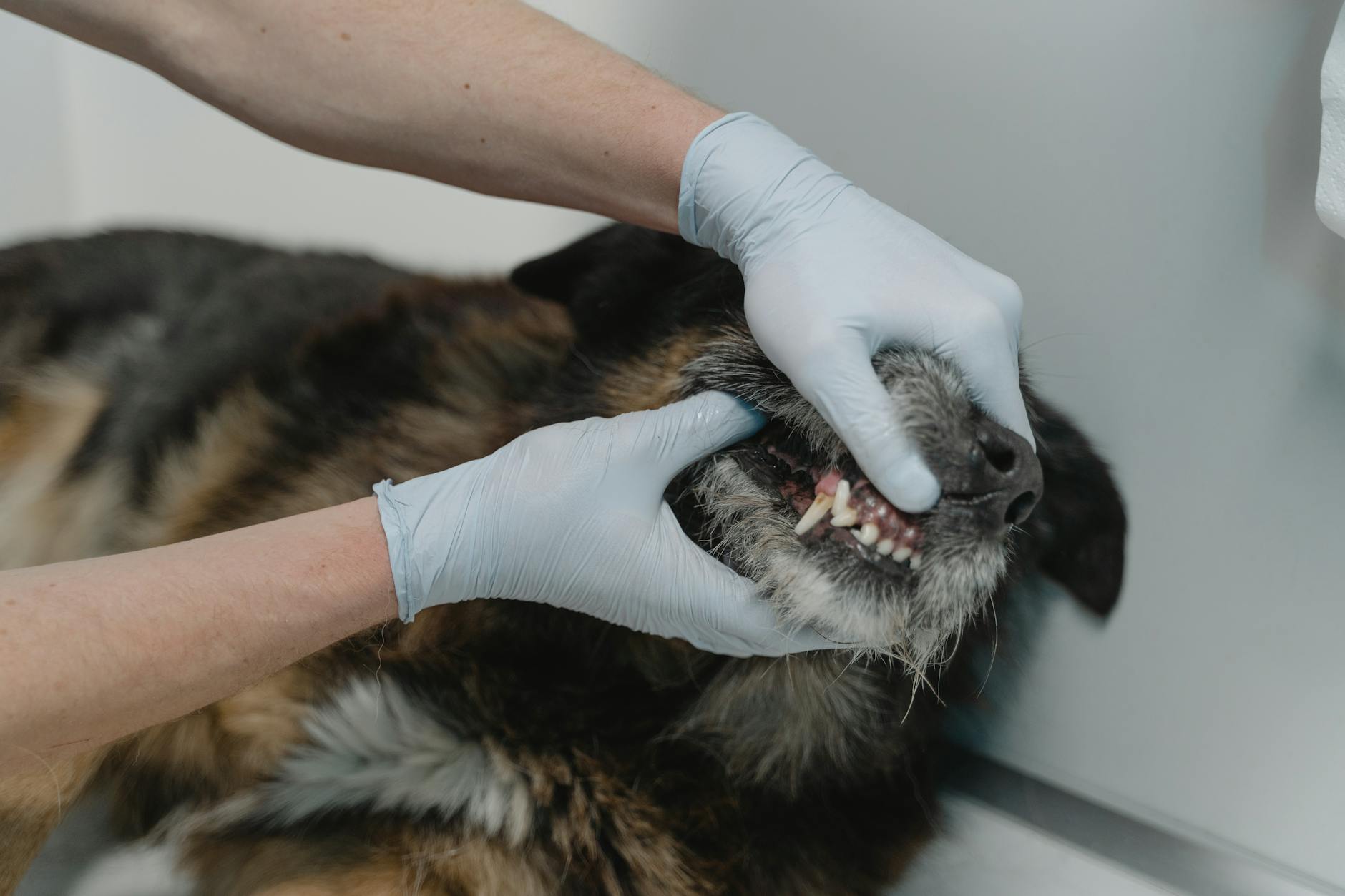
Photo by Tima Miroshnichenko
Dental illness and injury coverage: what’s commonly covered
Many accident and illness plans cover dental injuries like a broken tooth from chewing a rock. They also pay for illnesses such as gum disease, root infections, and extractions needed to fix them. Coverage kicks in if the problem starts after enrollment and isn’t pre-existing.
Plans often have a 14-day waiting period for illnesses, so new issues qualify soon after signup. This helps seniors with fresh plaque buildup or fractures. Coverage applies to adult teeth, not baby ones. Insurers may ask for dental exam records to confirm no prior damage.
For example, a fractured canine tooth repair, including X-rays and a crown, might reimburse $800 to $2,000 after your deductible. See details on pet insurance for dental care from ASPCA Pet Health Insurance. Always check your policy’s sample claims.
Routine cleanings and prevention: when you need a wellness add-on
Base plans skip routine cleanings since they count as preventive care, not illness or injury. You need a wellness add-on for those. These optional packages offer a set annual allowance, up to $150 or $200 on some plans, for cleanings, polishings, or dental chews.
Some insurers reimburse cleanings only if linked to a covered illness, like tartar removal during gum treatment. Wellness plans fill the gap for seniors prone to buildup. Add-ons cost extra, about $10 to $20 monthly, but save on pro cleanings that run $500 plus.
Lemonade Pet Insurance outlines add-ons for routine care, including dental options. Pick one if your older dog needs yearly checks to avoid disease.
Common exclusions that surprise owners (pre-existing dental disease, crowns, root canals)
Exclusions catch many off guard. Pre-existing conditions top the list: any dental disease noted before signup, like gum recession or loose teeth, stays uncovered forever. That includes periodontal disease or tooth resorption found in exams.
Cosmetic work, such as whitening, gets denied. Orthodontics for misaligned bites fall out too. Many plans exclude crowns, fillings, or most root canals unless tied to a covered injury. Simple fillings often count as routine, so no dice.
Here’s what owners often miss:
- Pre-existing checks: Vets review records; hidden issues from past visits count.
- Crowns and canals: Covered only for accidents, not decay.
- Exam rules: Policies demand proof of healthy mouth at start.
Read the dental section closely. Call your insurer to define terms like “periodontal disease.” PetMD covers pet dental insurance exclusions with clear examples. Ask about your senior dog’s records upfront to avoid claim denials.
How to Compare Pet Insurance Plans for Senior Dental Care
You want dental coverage for senior dogs that fits your budget and your pet’s needs. Start with a simple process. First, list three to five plans from sites like Pumpkin or ASPCA Pet Health Insurance. Get quotes using your dog’s age, breed, and zip code. Then, score each on eligibility, costs, and dental details. Pick the one that covers likely issues like gum disease without gaps. This takes 30 minutes and saves thousands later.
Start with senior eligibility: age limits, waiting periods, and required exams
Many plans welcome older dogs. Fetch, ASPCA, and Spot have no upper age limits, so your 10-year-old can enroll today. Others cap at eight or nine years, so check rules first.
Waiting periods delay coverage. Most plans use 14 days for accidents and illnesses, including dental ones. Pumpkin and Lemonade follow this standard. Dental illness waits the same time, but some add six months for orthopedics, which rarely affects teeth.
Exams matter too. Insurers often require a recent vet check, like within 12 months, to prove no issues at signup. Submit records upfront. Pre-existing findings, such as gum recession or tartar, block claims forever. Get a clean bill now if your dog has mild buildup. This step avoids denials on extractions later.
Focus on the numbers that change your real cost (deductible, reimbursement, annual limit)
These three numbers set your out-of-pocket spend. Adjust them to match your dog’s risks.
Deductible: You pay this first each year, say $250 to $1,000. A $500 choice drops monthly premiums by $10 to $20 but means you cover the initial bill. For a $1,500 extraction, you pay $500, then get reimbursed on the rest.
Reimbursement rate: Plans pay 70, 80, or 90 percent of approved costs. At 90 percent, that same $1,500 bill (after $500 deductible) returns $900. Lower rates save on premiums but pay less back. Pick 80 percent for balance if premiums pinch.
Annual limit: This caps payouts at $5,000, $10,000, or unlimited. Seniors with multiple teeth issues hit limits fast. A full-mouth cleanup at $3,000 uses half a $5,000 cap.
If your dog shows plaque but no disease, choose a $10,000 limit. It handles surprises without maxing out. Use tools from NerdWallet to plug in numbers and see real costs.
Here’s how choices play out for a $2,000 dental bill:
| Deductible | Reimbursement | Annual Limit | Your Cost After Reimbursement |
|---|---|---|---|
| $250 | 90% | $10,000 | $475 |
| $500 | 80% | $5,000 | $900 |
| $1,000 | 70% | Unlimited | $1,500 |
Check the fine print for dental: full-mouth coverage, periodontal language, and extractions
Dental terms hide traps. Look for plans that name periodontal disease, gingivitis, and extractions in the illness section. Trupanion and Fetch cover these without add-ons.
Confirm full-mouth scope. Does it include all adult teeth? Many skip baby teeth or limit to front ones. X-rays and anesthesia count as diagnostics, so they tag along with covered procedures.
Base plans often cover illness, not just accidents. A new abscess from gum disease qualifies, but routine cleanings need wellness add-ons. Read samples: ASPCA details dental care. Call with your dog’s records. Ask if periodontal pockets or root work falls under extractions. Clear yeses mean real protection for seniors.
Best Options in 2026 for Dental Coverage for Senior Dogs
Owners of older dogs often turn to pet insurance for dental protection as costs rise. In 2026, several providers stand out for their flexibility with seniors. These plans cover issues like periodontal disease and extractions in base policies or add-ons. Premiums vary by breed, age, and location, so get personalized quotes to see real numbers. Here’s a look at top choices that handle senior needs well.
Top insurers often chosen for senior dental coverage
Fetch Pet Insurance accepts dogs at any age with no upper limit. It includes base coverage for dental illnesses such as gum disease and extractions. Check Fetch’s dental details for specifics.
Lemonade Pet Insurance enrolls dogs up to age 14. Base plans cover dental accidents and some illnesses, with customizable deductibles to fit budgets.
Spot Pet Insurance has no age cap for new enrollments. It offers strong base dental illness coverage after a short wait, though it skips crowns and root canals. NerdWallet reviews Spot as a top dental pick.
Pumpkin Pet Insurance covers dental illnesses and injuries in its standard policy. You can pick from set reimbursement rates and limits, which suits steady coverage needs.
ASPCA Pet Health Insurance welcomes seniors without age limits. Its complete coverage pays for periodontal disease, gingivitis, and extractions as illnesses.
Embrace Pet Insurance sets a 14-year maximum age. It provides base dental illness coverage, including periodontal issues. See Embrace’s dental page for covered treatments like abscesses.
Pets Best Pet Insurance offers wellness add-ons that reimburse up to $150 for cleanings. Base plans handle dental illnesses, with flexible annual limits.
Each works for different setups. Compare based on your dog’s age and history.
What to expect on price for senior dogs (why quotes vary so much)
Monthly premiums for senior dogs often range from $50 to $150 or more. A 10-year-old Labrador in Texas might pay $80 for a mid-tier plan, while the same dog in California hits $110. These serve as examples; your quote depends on key factors.
Age drives the biggest jump since risks grow. A 12-year-old pays 50 percent more than an eight-year-old in most cases.
Breed matters too. Small dogs like Chihuahuas face higher dental odds, so premiums climb 20 to 30 percent over large breeds.
Location affects rates through vet costs and claims data. Urban areas cost more.
You control deductible, reimbursement rate, and annual limit. A $500 deductible and 80 percent reimbursement cuts premiums by $15 monthly versus lower options.
Here’s how choices shift costs for a sample senior plan:
| Factor | Low-End Example | High-End Example |
|---|---|---|
| Deductible | $100 | $1,000 |
| Reimbursement | 70% | 90% |
| Annual Limit | $5,000 | Unlimited |
| Monthly Premium | $55 | $120 |
Weigh value this way: if a cleaning costs $800, an annual premium under $1,000 pays off fast. Run quotes to match your setup.
Quick match guide: which plan features fit common senior-dog situations
Match features to your dog’s profile for the best fit. Here are four common cases.
Older dog with clean dental history but high-risk breed like a Maltese. Prioritize no age limit and strong base dental illness coverage. This catches new gum issues early.
Dog that hates tooth brushing and skips home care. Look for wellness add-ons that cover pro cleanings. They prevent buildup without daily fights.
Dog with mild tartar but no formal diagnosis. Seek plans with clear periodontal wording in base coverage. It handles progression to disease.
Very senior dog, say age 13, facing enrollment hurdles. Choose providers with no upper age cap and short waiting periods. Submit clean records to start protection now.
These guides help narrow options. Review policy samples and get quotes tailored to your pet.
Conclusion
Senior dogs often battle common dental woes like periodontal disease and fractured teeth, which rack up bills from $500 cleanings to $3,000 emergencies. Dental coverage for senior dogs steps in for most accidents and illnesses, such as extractions and gum treatments after a short waiting period. Base plans handle these well, but routine cleanings usually require wellness add-ons that cost $10 to $20 extra monthly. Policy details make the difference: pre-existing conditions stay excluded forever, so recent vet records prove a clean start. Annual limits, deductibles, and reimbursement rates shape your real savings, with top 2026 picks like Fetch and ASPCA offering strong options for older pets.
Protect your dog without delay. Take these steps now:
- Schedule a full dental exam to spot issues early.
- Gather vet records to check for pre-existing problems.
- Get quotes from at least three providers like Fetch, Lemonade, and Spot.
- Compare dental coverage wording, limits, and senior eligibility.
Smart coverage keeps your senior comfortable and cuts stress. Your loyal companion deserves pain-free smiles for years ahead.