
Pet Insurance for Small Breed Dogs with Respiratory Issues
French Bulldogs and Pugs top the list of small breeds prone to respiratory woes. BOAS (Brachycephalic Obstructive Airway Syndrome) affects about 50% of them with serious breathing blocks from narrow nostrils, long soft palates, and pinched windpipes. Collapsing trachea adds to the mix, sparking snoring, panting, exercise fatigue, and even life-shortening risks like heat stroke.
Pet insurance steps in to tackle these costly hits. Here are three key benefits:
- It covers pricey surgeries to widen nostrils or trim soft palates, which ease breathing without draining your savings.
- Owners avoid surprise bills from emergency oxygen therapy or inflammation meds during flare-ups.
- Plans offer peace of mind, so you focus on your dog’s health, not finances.
Pet insurance for small breed dogs with respiratory issues cuts stress and shields your wallet from vet expenses that pile up fast. These breeds face shorter lives (around 8.6 years for extreme flat-faces versus 12.7 for others), and untreated problems worsen quickly.
This post breaks it down. You’ll learn common issues like BOAS signs and collapsing trachea triggers. We cover treatment basics, why costs vary, top insurance picks that handle pre-existing breathing conditions, and smart tips to pick the right plan for your pup. Stick around to save time and money.
Common Respiratory Issues in Small Breed Dogs
Small breed dogs often deal with breathing problems that cut playtime short and raise vet bills. BOAS and collapsing trachea top the list. These conditions hit hard in flat-faced and toy breeds. Pet insurance for small breed dogs with respiratory issues pays for diagnostics and fixes, so you skip the financial shock.
Breeds at High Risk for BOAS
French Bulldogs, Pugs, Boston Terriers, and Shih Tzus face the biggest BOAS threat. Their short noses and flat faces squash airways. Narrow nostrils block air intake right away. A long soft palate flops back and crowds the throat. Pinched windpipes add more resistance.
BOAS cuts oxygen flow during play or heat. Dogs tire fast on walks. They overheat in warm weather since panting fails. Vet studies show a large share of these breeds show signs by young adulthood. One analysis of over 50,000 dogs found brachycephalic breeds claim breathing issues far more than others. Nationwide’s report backs this with claims data.
Owners notice gagging after short bursts of activity. Sleep turns noisy with snorts. Without care, heart strain sets in.
Toy Breeds Prone to Collapsing Trachea
Yorkshire Terriers, Pomeranians, Chihuahuas, Toy Poodles, and Maltese top the list for collapsing trachea. The windpipe’s cartilage rings weaken and flatten. This narrows the tube, especially under pressure.
A honk cough signals trouble. It sounds like a goose when the dog gets excited or pulls on a leash. Pressure from a collar squeezes the trachea more. Obesity bulges neck fat and worsens collapse. Smoke irritates airways and speeds decline.
Cornell University’s overview notes this hits middle-aged or older toy dogs most. Management starts with harnesses over collars. Weight control helps too.

Photo by Sam Lion
Signs Your Small Dog Needs Vet Attention
Watch for these red flags in your small dog. Early checks prevent crises.
- Loud snoring at rest points to airway blocks.
- Honk cough during excitement or pulls shows trachea issues.
- Open-mouth breathing all the time means poor air exchange.
- Blue gums signal low oxygen; this is urgent.
- Fainting after play warns of severe restriction.
Don’t wait. A vet exam spots trouble fast. X-rays confirm BOAS or collapse stages. Pet insurance covers these visits and more, so you act without delay.
Treatment Costs for Respiratory Problems Without Insurance
Small breed dogs with respiratory issues face steep bills without insurance. BOAS surgery and collapsing trachea treatments often run thousands of dollars. These costs cover diagnostics, procedures, and follow-up care. Pet insurance for small breed dogs with respiratory issues offsets much of this burden. Let’s break down the numbers.
BOAS Surgery Expenses
BOAS correction targets narrow nostrils, excess soft palate tissue, and everted saccules. Full procedures cost $1,500 to $5,000. Simpler fixes, like widening nostrils alone, range from $800 to $2,500.
Prices climb with complexity. Dogs needing multiple fixes hit $3,000 to $5,000. Location matters too; urban vets charge more than rural ones. Add $200 to $500 for pre-op tests like X-rays or scopes.
Specialty clinics quote higher for board-certified surgeons. Check details on BOAS surgery costs. Another source lists typical ranges at Dial a Vet.
Collapsing Trachea Treatment Costs
Mild cases use meds and lifestyle changes first. Cough suppressants and bronchodilators cost $50 to $150 per month. Severe collapse requires stents or rings, priced at $3,500 to $6,500.
Emergency care for breathing crises adds up fast. Oxygen therapy and stabilization run up to $3,000. Harness switches help manage but don’t replace vet intervention.
Factors like dog size and severity affect totals. Small breeds keep costs lower than larger ones. See tracheal surgery estimates here.
Diagnostics and Medication Breakdown
Vets start with exams and imaging. Office visits cost $50 to $150. Chest X-rays run $100 to $300. Endoscopy or fluoroscopy adds $500 to $1,500.
Blood work checks for infections at $100 to $250. Meds include steroids for swelling ($20 to $100 monthly) and antibiotics ($30 to $80 per course).
Here’s a quick cost overview:
| Procedure/Treatment | Average Cost Range |
|---|---|
| Initial Vet Exam | $50 – $150 |
| X-rays | $100 – $300 |
| Endoscopy | $500 – $1,500 |
| BOAS Surgery (Full) | $1,500 – $5,000 |
| Trachea Stents | $3,500 – $6,500 |
| Monthly Meds | $50 – $150 |
These figures exclude travel or overnight stays. Without coverage, one crisis empties savings. Insurance plans cap out-of-pocket hits and cover 70% to 90% after deductibles.
How Pet Insurance Covers Respiratory Issues in Small Dogs
Pet insurance for small breed dogs with respiratory issues reimburses costs for diagnostics, surgeries, and care. Policies pay 70% to 90% of eligible bills after deductibles. This setup helps owners afford treatments for BOAS and collapsing trachea. Coverage varies by provider, but accident and illness plans handle most respiratory fixes.
What Respiratory Treatments Are Covered
Plans cover key steps from diagnosis to recovery. Vets use these to pinpoint and treat airway blocks or collapses. Coverage kicks in for new issues after waiting periods, often 14 days.
Common treatments include:
- X-rays: Show trachea flattening or soft palate issues. Costs run $100 to $300; insurance reimburses most.
- Endoscopy: A scope views airways up close. Expect $500 to $1,500 covered.
- BOAS surgery: Widens nostrils and shortens palates. Policies like those from Trupanion cover it if eligible, with totals from $1,500 to $5,000. Check Insurify’s guide on BOAS coverage for details.
- Tracheal stents: Props open weak windpipes in bad cases. Reimbursement hits $3,500 to $6,500.
- Hospital stays: Oxygen therapy during crises qualifies. Plans offset $1,000 to $3,000 stays.
- Ongoing meds: Cough suppressants, steroids, and bronchodilators get paid monthly at $50 to $150.
These items fall under illness coverage. Providers review vet records to approve claims fast.
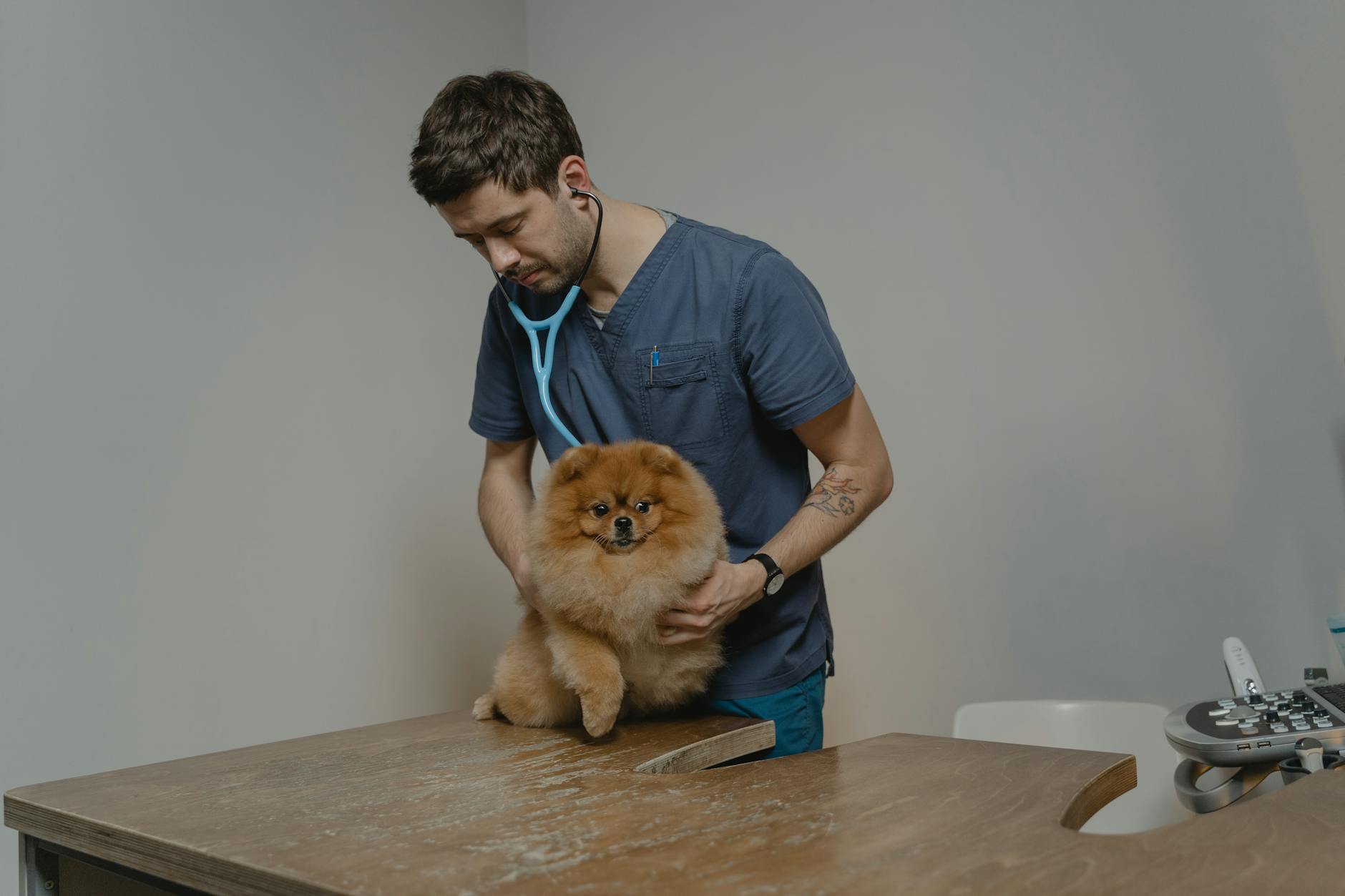
Photo by Tima Miroshnichenko
Handling Pre-Existing Conditions
Most plans exclude pre-existing conditions. Insurers define these as any signs or diagnoses before your policy starts. Respiratory symptoms like honk coughs or snoring count if noted in records.
This rule keeps premiums low. Your Pug’s BOAS from puppyhood won’t qualify. Claims get denied, even years later.
AKC Pet Insurance stands out. It covers incurable conditions after 365 days without treatment or symptoms. See their pre-existing conditions policy for rules.
Disclose your dog’s full history upfront. Vets submit records at enrollment. Hiding issues leads to voided policies. Honest applications help match the right plan to your small dog’s needs.
Top Pet Insurance Providers for Small Breeds with Breathing Problems
Small breed dogs with respiratory issues like BOAS or collapsing trachea need pet insurance that pays for surgeries and meds fast. Top providers excel in coverage for these breeds. Pet insurance for small breed dogs with respiratory issues shines with flexible terms and high reimbursements from companies like Embrace, Healthy Paws, and Trupanion.
Embrace, Healthy Paws, and Trupanion Compared
These three lead for small breeds. Embrace offers flexible deductibles from $0 to $1,000 in $50 steps. You pick what fits your budget. It covers 70%, 80%, or 90% back after the deductible. No lifetime caps mean full BOAS surgery payouts up to $5,000 or more.
Healthy Paws stands out with unlimited annual and lifetime payouts. Pick 50% to 90% reimbursement and one deductible amount. Claims process in days, perfect for urgent trachea stents. It skips wellness add-ons but handles illnesses strong.
Trupanion pays a fixed 90% of every bill after a $0 to $1,000 deductible. No payout caps or age limits keep costs predictable for chronic breathing care. Direct vet payments speed things up.
Here’s how they stack up for respiratory coverage:
| Feature | Embrace | Healthy Paws | Trupanion |
|---|---|---|---|
| Reimbursement | 70-90% customizable | 50-90% customizable | Fixed 90% |
| Deductible Options | $0-$1,000 flexible | Annual, one-time choice | $0-$1,000 per condition |
| Annual/Lifetime Cap | None | Unlimited | None |
| Waiting Period | 2-14 days | 15 days illness | 5 days accidents |
| BOAS Surgery Example | Covers post-waiting | Full reimbursement | 90% direct to vet |
Embrace suits budget tweaks; check their BOAS info. Healthy Paws fits high-risk pups. Trupanion works for steady coverage; see Trupanion vs. Embrace.
Other Strong Options Like ASPCA and Lemonade
ASPCA provides broad coverage beyond basics. It includes exam fees, behavioral issues, and prescription food. Reimbursements hit 70-90% with deductibles from $100 to $1,000. No exam needed at signup, unlike some rivals. Complete plans cover respiratory meds and diagnostics fully.
Lemonade processes quick claims via app in minutes. Reimbursements range 70-90% with $100-$750 deductibles. Annual limits start at $5,000 but go to $100,000. It bundles well for multi-pet homes and skips pre-existing hurdles after waiting periods.
Both handle small breed claims well. ASPCA edges on extras; Lemonade wins speed. Compare ASPCA vs. Lemonade. Get quotes to match your dog’s needs.
Tips to Choose the Best Pet Insurance Policy
Pet insurance for small breed dogs with respiratory issues demands a close look at policy details. These dogs face ongoing costs from BOAS flare-ups or trachea collapses. Pick a plan that matches their needs to avoid gaps in coverage. Focus on terms that handle high bills and repeat treatments.
Key Policy Features to Prioritize
Start with high coverage limits. Unlimited annual or lifetime payouts suit chronic respiratory care. Your French Bulldog’s BOAS surgery might cost $5,000 now, but meds and checkups add up yearly. Plans without caps, like those from Healthy Paws, cover endless claims for conditions such as collapsing trachea. Check their chronic condition coverage for specifics.
Next, seek short waiting periods. Accidents often wait 1 to 5 days, but illnesses need 14 days or less. Respiratory issues strike fast in small breeds, so quick coverage prevents out-of-pocket hits on early treatments. Trupanion’s 5-day accident wait and 30-day illness period works well here.
Aim for high reimbursement rates, especially for chronic care. Choose 80% to 90% back after deductibles. This offsets $3,500 trachea stents or monthly bronchodilators at $100 a pop. Customizable options let you balance premiums with payouts.
Consider these must-haves in any policy:
- Annual deductible resets: Pick per-condition or annual to control costs over time.
- Direct vet pay: Speeds claims for emergencies like oxygen therapy.
- Exam fee coverage: Adds $50 to $150 per visit without extra cost.
Compare providers using sites like Money’s best pet insurance list to match your dog’s risks. Get multiple quotes. Your small breed deserves coverage that lasts.

Photo by Sam Lion
Conclusion
Small breed dogs with respiratory issues like BOAS or collapsing trachea rack up bills from $1,500 to $6,500 for surgeries, stents, and meds. Pet insurance for small breed dogs with respiratory issues covers 70% to 90% of these costs after deductibles, with no caps on top plans.
Act fast before symptoms become pre-existing conditions that most policies exclude. Embrace offers flexible deductibles and customizable reimbursements. Healthy Paws provides unlimited payouts for chronic care. Trupanion pays 90% directly to vets. Compare these with ASPCA and Lemonade for the best fit.
Get free quotes today from multiple providers to lock in coverage. Your French Bulldog or Yorkie deserves treatments without wallet strain.
Pet insurance frees you to focus on your dog’s health and happiness, not surprise vet tabs.